AI Boom Is Mispriced: Why Infrastructure — Not Models — Will Capture Most Value in 2026
AI boom may be mispriced. Discover why infrastructure, not models, could capture the most value in 2026.
By VA Andrew | chainintellectcoin.com | 2026-04-05
Val Andrew is a Founder ChainIntellect Coin, blockchain researcher focused on AI infrastructure, decentralized systems, and autonomous economic networks.
The AI boom is accelerating — but the market may be pricing it incorrectly.
Most attention is focused on:
- smarter models
- better applications
- faster outputs
But beneath the surface, a more important shift is happening:
The real value in AI is moving toward infrastructure
In 2026, capital, development, and strategic focus are increasingly shifting to the systems that power AI — not just the models themselves.
📊 The Market Is Focused on the Wrong Layer
Today’s narrative centers on:
- AI applications
- model capabilities
- user-facing innovation
However, these layers depend entirely on underlying systems:
compute, data and identity
transaction infrastructure
These foundational layers determine how scalable, secure, and accessible AI can become.
Why Infrastructure Captures More Value
Historically, infrastructure layers dominate long-term value creation:
- Cloud providers captured the majority of value during the internet expansion
- Payment networks became core to global financial systems
- Energy infrastructure defined industrial growth
AI is following the same structural pattern
The systems that enable intelligence often become more valuable than the intelligence itself.
The Hidden Bottleneck: Compute + Data
AI systems require:
- high-performance compute (GPUs / distributed systems)
- continuous data access
- scalable processing environments
📊 Market Signal
Industry trends indicate that investment in AI infrastructure — including compute, data pipelines, and decentralized systems — is accelerating as demand for scalable AI continues to grow in 2026.
This creates a fundamental reality:
Who controls compute and data controls AI
The Centralization Risk
Currently, infrastructure is largely controlled by centralized entities.
This leads to:
- concentration of power
- high operational costs
- limited access for smaller developers
This restricts innovation and creates structural dependency.
The Shift Toward Decentralized Infrastructure
A new model is emerging:
Decentralized AI infrastructure
This includes:
- distributed compute networks
- tokenized resource sharing
- decentralized data coordination
- blockchain-based transaction layers
Real-World Direction
Early-stage systems and platforms are already exploring:
- decentralized compute markets
- tokenized data ecosystems
- blockchain-based AI coordination
These models aim to:
- reduce cost barriers
- increase participation
- distribute economic value
transforming AI from a centralized service into a network-based economy
Market Structure Insight
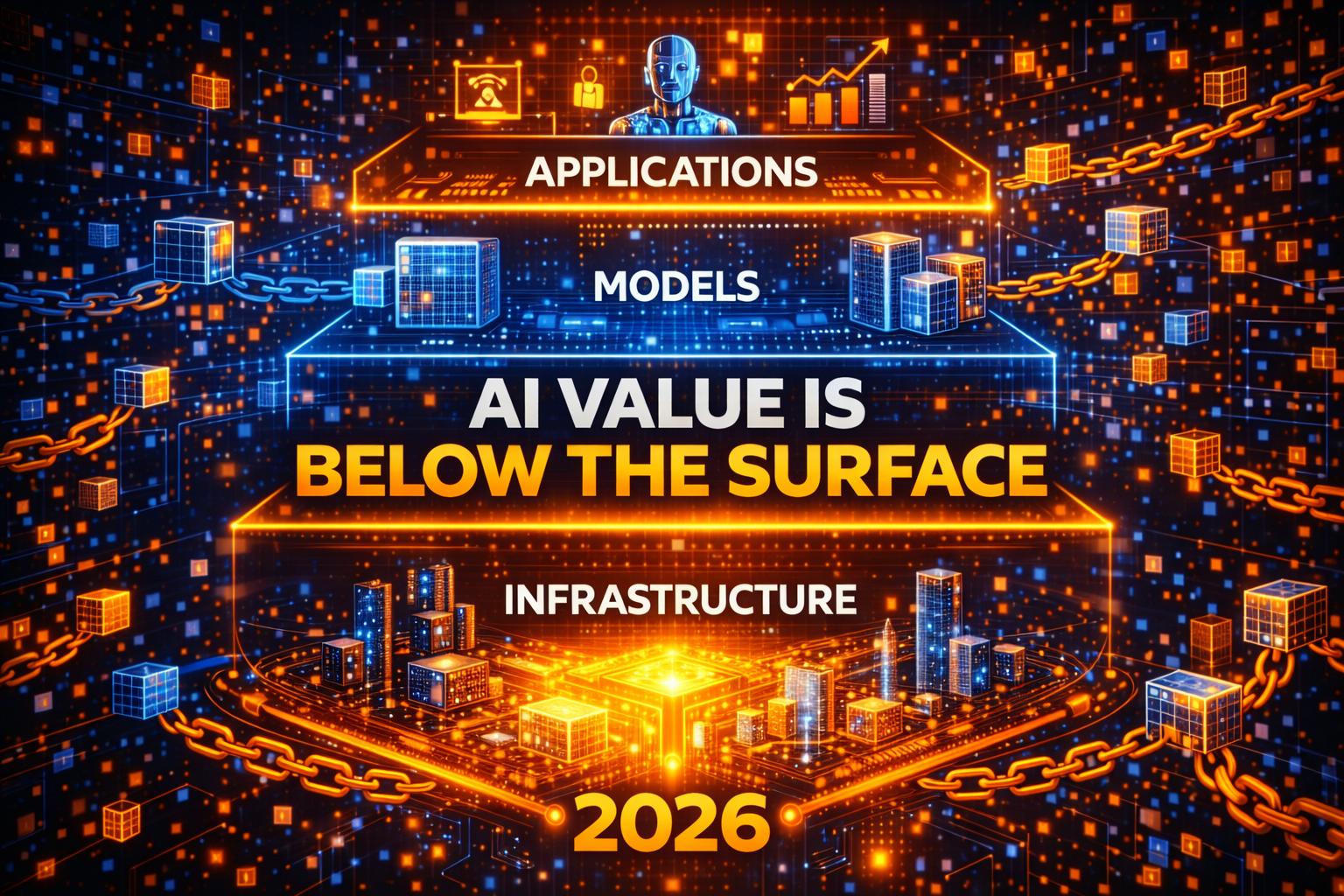
The AI stack can be simplified into three layers:
1 Application Layer
- AI tools
- user interfaces
High visibility, lower defensibility
2 Model Layer
- training systems
- algorithms
Rapid innovation, increasing commoditization
3 Infrastructure Layer (Core Value Layer)
- compute
- data
- verification
- transaction systems
This is where long-term value is likely to accumulate
Counterargument: Models Still Matter
While infrastructure is critical, models still play a key role:
- driving user adoption
- enabling innovation
- shaping competitive differentiation
The future of AI will likely be defined by the balance between:
infrastructure power + model capability
Where ChainIntellectCoin (HAIN) Fits
Platforms like ChainIntellectCoin (HAIN) are positioned within this emerging infrastructure layer, focusing on:
- decentralized intelligence systems
- AI-compatible transaction frameworks
- transparent and verifiable data environments
https://chainintellectcoin.com
This aligns with the broader shift toward open, distributed AI ecosystems
Challenges
Despite strong momentum, challenges remain:
- scalability vs centralized systems
- coordination across distributed networks
- regulatory clarity
However, these are engineering and adoption challenges — not structural limitations.
Why This Matters
Most market participants focus on visible innovation.
But historically:
value accrues to the invisible layers that enable everything else
AI appears to be following this same trajectory.
Conclusion
The AI boom is real — but it may be misunderstood.
While attention remains on models and applications, the deeper opportunity lies beneath:
the infrastructure powering intelligence
Understanding this shift may determine who captures value in the next phase of the digital economy.