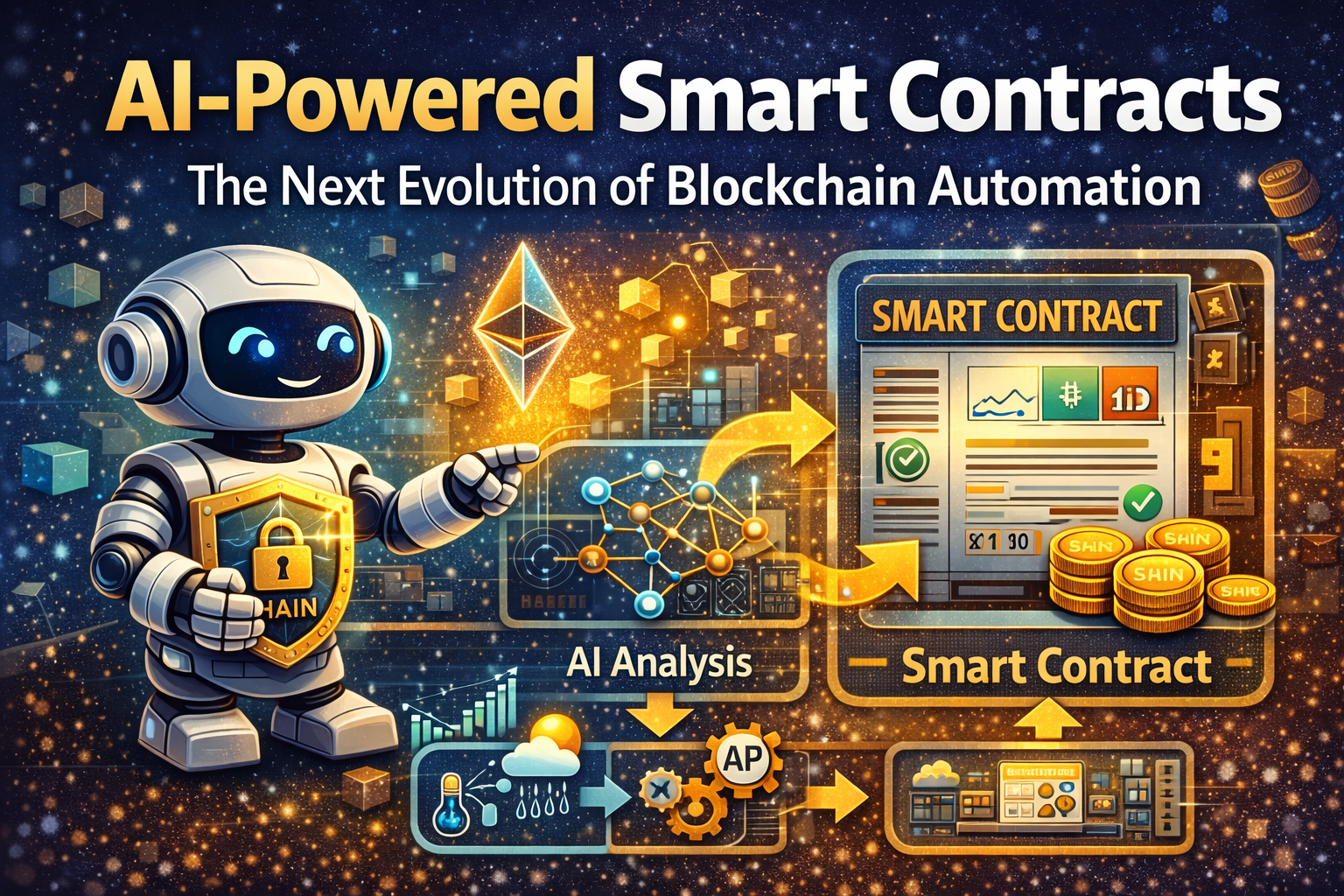
AI-Powered Smart Contracts: The Next Evolution of Blockchain Automation
Discover how AI-powered smart contracts combine blockchain automation with machine learning to create adaptive, intelligent agreements for finance, logistics, and digital economies.
By Val Andrew | chainintellectcoin.com | 2026-03-16
Smart contracts revolutionized blockchain by enabling agreements that execute automatically when predefined conditions are met. But traditional smart contracts are still limited—they follow static rules and cannot adapt to real-world changes.
By combining artificial intelligence with blockchain, platforms like ChainIntellectCoin introduce a new concept: AI-powered smart contracts. These intelligent contracts can analyze data, make predictions, and adjust execution logic based on real-time conditions.
This fusion creates a more dynamic and intelligent decentralized ecosystem.
What Are Smart Contracts?
A smart contract is a self-executing program stored on a blockchain that automatically enforces an agreement between parties.
A simple analogy:
- Traditional contract: Requires lawyers and intermediaries.
- Smart contract: Works like a vending machine—insert the correct input and the outcome is automatically delivered.
Smart contracts were popularized on Ethereum, which allows developers to deploy programmable decentralized applications.
However, traditional smart contracts rely on fixed logic, meaning they cannot interpret complex data or adapt to changing circumstances.
How AI Enhances Smart Contracts
Artificial intelligence introduces intelligence and adaptability to blockchain automation.
AI-powered smart contracts can:
- Analyze real-time market data
- Predict outcomes using machine learning
- Adjust execution rules dynamically
- Optimize operations based on historical patterns
For example, an AI-enabled contract could adjust supply chain delivery schedules if weather forecasts predict delays.
How AI Smart Contracts Work
Step 1 – Data Input
External data is collected from sensors, APIs, or market feeds.
Step 2 – AI Analysis
AI models evaluate the incoming data and generate predictions or decisions.
Step 3 – Smart Contract Execution
The blockchain contract executes actions based on AI insights.
Step 4 – On-Chain Verification
All results are recorded on-chain for transparency and auditing.
Real-World Applications
1. Supply Chain Automation
AI-powered smart contracts can automatically reroute shipments when delays occur, improving logistics efficiency.
2. Financial Markets
AI algorithms analyze market conditions and trigger automated trades through blockchain contracts.
3. Insurance Claims
Claims can be processed automatically when verified events occur, reducing fraud and administrative overhead.
4. Energy Markets
AI contracts can optimize energy distribution in decentralized power grids.
Benefits of AI + Blockchain Automation
Transparency
All decisions and transactions are recorded on-chain.
Efficiency
Automated contracts reduce delays and administrative costs.
Security
Blockchain ensures tamper-proof execution.
Scalability
AI helps contracts adapt to complex, real-world conditions.
Future Outlook
The integration of AI with blockchain will create self-managing digital economies, where intelligent contracts interact with autonomous agents.
Within ecosystems like ChainIntellectCoin, AI-powered smart contracts could coordinate everything from decentralized data markets to automated investment strategies.
This represents a major step toward fully autonomous digital infrastructure.
Conclusion
AI-powered smart contracts represent the next phase of blockchain innovation. By combining decentralized execution with machine intelligence, platforms like ChainIntellectCoin aim to build transparent, adaptive, and efficient digital systems.
As AI and blockchain continue to converge, intelligent automation will redefine how businesses, institutions, and individuals interact with technology.