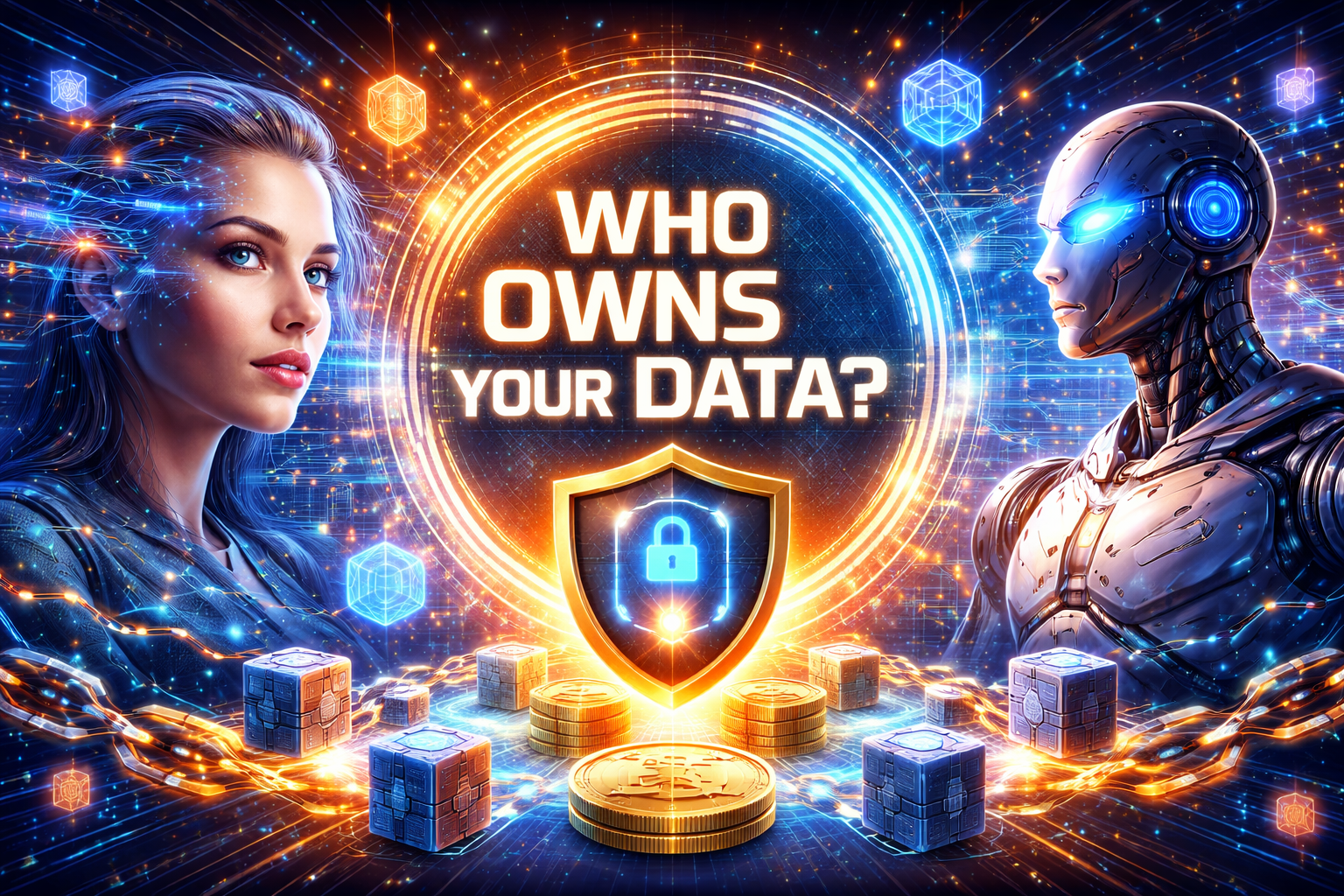
Who Owns Your Data in the Age of AI? How Blockchain Is Changing the Answer
Who owns your data in the age of AI? Discover how blockchain is giving users control and reshaping data ownership in 2026.
By Val Andrew | chainintellectcoin.com | 2026-03-23
Who Owns Your Data in the Age of AI? How Blockchain Is Changing the Answer
Introduction
Every time you use AI — whether it’s a chatbot, recommendation system, or smart assistant — your data is being used.
But here’s the real question:
Who actually owns that data?
In 2026, this question is becoming one of the most important in technology.
The Hidden Cost of AI
AI systems depend on massive amounts of data to function.
This includes:
personal behavior
preferences
interactions
digital identity
Most of this data is: collected, stored, and controlled by centralized platforms
Users rarely know:
where their data goes
how it is used
who profits from it
Why This Is Becoming a Problem
As AI becomes more powerful, data becomes more valuable.
This creates major concerns:
Loss of data ownership
Lack of transparency
Potential misuse of personal information
At the same time, AI systems are becoming more integrated into everyday life — making this issue impossible to ignore.
How Blockchain Changes Data Ownership
Blockchain introduces a new model:
Decentralized data ownership
Instead of companies controlling data, users can:
Own their data directly
Decide how it is shared
Get rewarded for its use
This shifts control from platforms to individuals.
What This Looks Like in Practice
With blockchain-based systems:
Data can be stored in decentralized networks
Access can be controlled through cryptographic keys
Usage can be tracked transparently
In some models: Users can even earn tokens when their data is used
The Rise of Data Economies
A new type of economy is emerging:
Data marketplaces
In these systems:
Individuals provide data
AI developers purchase access
Transactions happen transparently
This creates a system where data becomes: 👉 a tradable and owned asset
Role of Blockchain Ecosystems
Platforms like ChainIntellectCoin (HAIN) are exploring how decentralized systems can support:
AI data sharing
transparent data usage
tokenized incentives
This helps create a fairer system where users benefit from the data they generate.
Challenges
Despite the potential, challenges remain:
scalability of decentralized systems
user adoption
regulatory uncertainty
Why This Matters
As AI continues to grow, data will become one of the most valuable digital resources.
The question is no longer: “Is AI important?”
But: “Who controls the data behind it?”
Conclusion
Blockchain is introducing a new way to think about data ownership — one where users have control instead of platforms.
In the coming years, this shift could redefine how AI systems are built, used, and trusted.