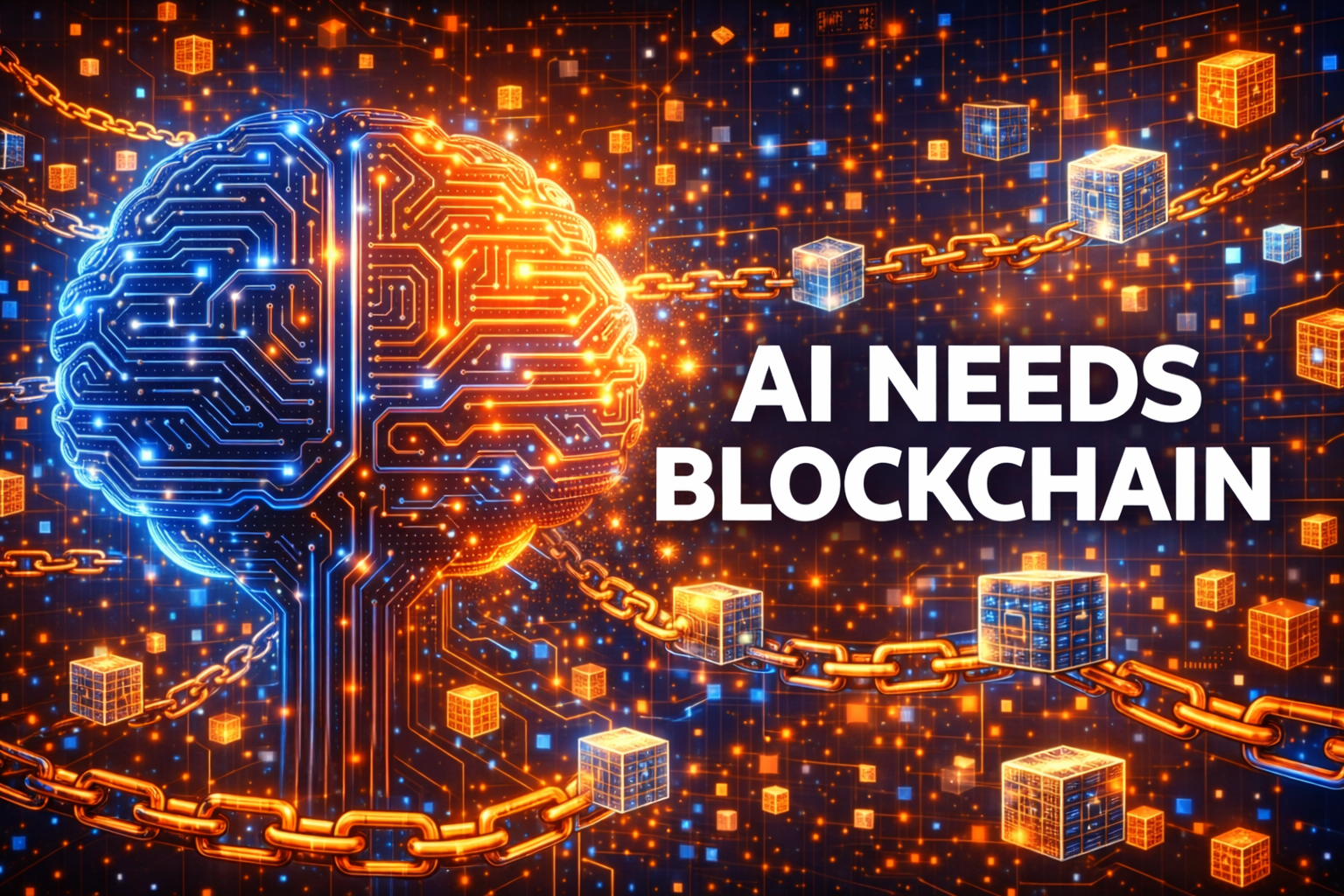
Why AI Needs Blockchain: The Missing Layer That Could Define the Future of Intelligence
Discover why blockchain is becoming essential for AI in 2026, enabling transparency, trust, and verifiable intelligence systems.
Val Andrew | chainintellectcoin.com | 2026-03-28
Artificial intelligence is rapidly becoming one of the most powerful technologies in the world.
But there’s a growing concern:
AI is powerful — but not always trustworthy
In 2026, experts are increasingly asking:
What is missing from AI?
The answer may be:
Blockchain
The Core Problem With AI Today
Most AI systems today operate in centralized environments.
This means:
- decisions are not transparent
- data sources are unclear
- outcomes cannot be independently verified
Users are often forced to trust systems they cannot inspect.
Why This Matters
As AI expands into critical areas such as:
- finance
- healthcare
- digital identity
the risks increase.
Without transparency, AI systems can:
- produce biased results
- be manipulated
- operate without accountability
How Blockchain Solves This
Blockchain introduces three key advantages:
✅ Transparency
Every action can be recorded and verified
✅ Immutability
Data cannot be changed once recorded
✅ Decentralization
No single entity controls the system
Real-World Application
Blockchain can enhance AI systems by:
- tracking model training data
- verifying decision processes
- securing data exchanges
This creates verifiable AI systems instead of black-box models.
The Rise of Verifiable Intelligence
A new concept is emerging:
Verifiable Intelligence
This means AI systems can:
- prove how decisions are made
- show data origins
- ensure outputs are trustworthy
This is especially important in high-stakes environments.
Role of Blockchain Ecosystems
Platforms like ChainIntellectCoin (HAIN) are exploring how blockchain can support:
- AI-driven systems
- decentralized intelligence networks
- transparent data ecosystems
Learn more: https://chainintellectcoin.com
Challenges
Despite its potential, combining AI and blockchain still faces challenges:
- scalability
- integration complexity
- adoption barriers
However, these challenges are being actively addressed.
Why This Matters in 2026
The future of AI will not be defined only by intelligence — but by trust.
Blockchain provides a foundation for building AI systems that are:
- transparent
- secure
- verifiable
Conclusion
AI alone is powerful.
But without trust, its impact is limited.
Blockchain introduces a way to verify and secure AI systems — potentially becoming the missing layer that defines the next generation of technology.