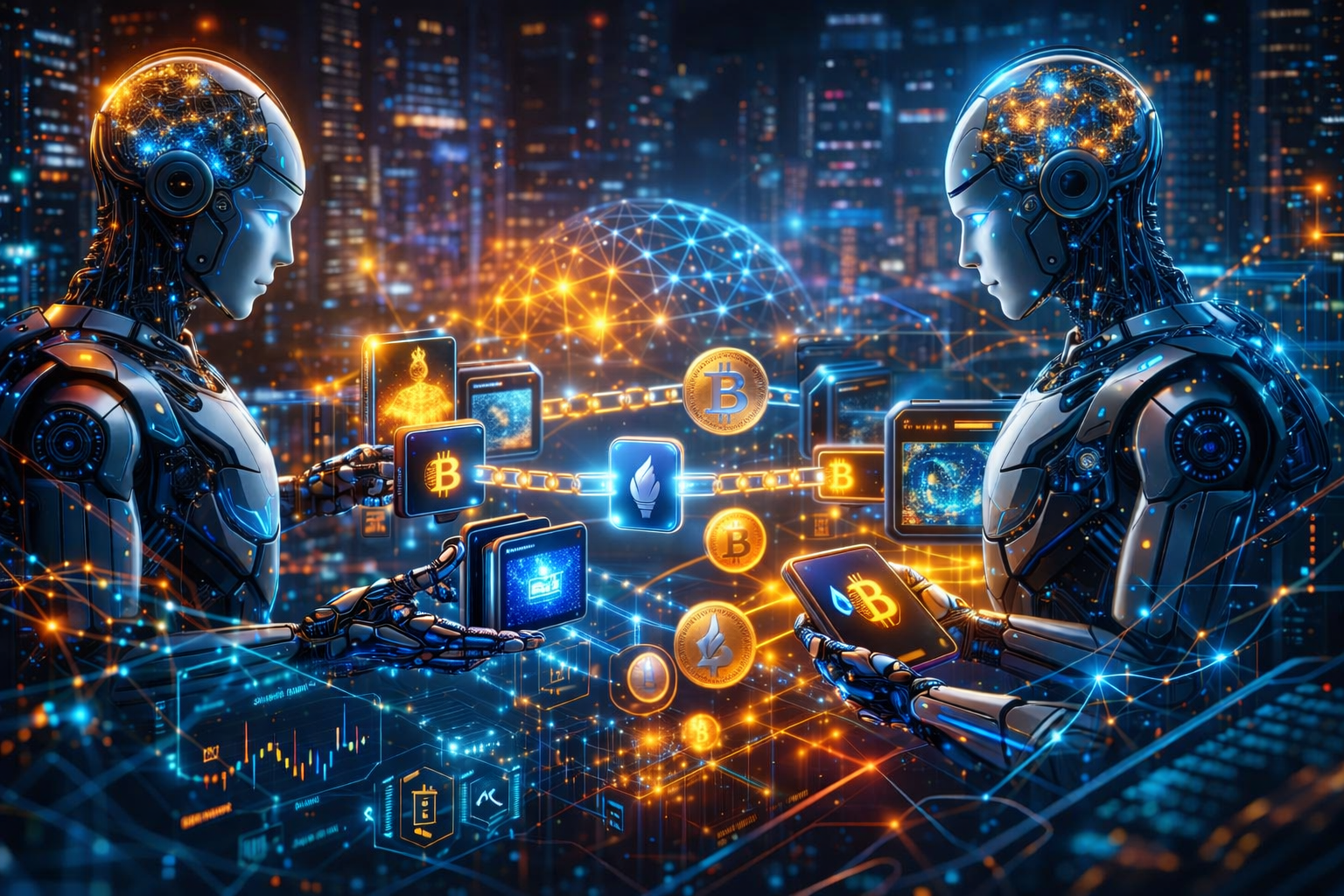
AI Agents and Tokenized Assets Drive New Phase of Crypto Market Evolution in 2026
AI agents, tokenized assets, and institutional adoption are reshaping crypto in 2026. HAIN provides the decentralized infrastructure powering this new machine-driven economy.
By Val Andrew | chainintellectcoin.com | 2026-03-14
AI-driven systems and tokenized assets are gaining momentum in 2026, as developers and institutions explore new ways to automate financial activity and expand access to digital markets.
The convergence of artificial intelligence and blockchain technology is beginning to reshape how assets are created, traded, and managed across the crypto ecosystem.
AI Agents Enter Financial Workflows
AI agents are increasingly being deployed to perform tasks traditionally handled by humans, including:
- Monitoring market conditions in real time
- Executing trades automatically
- Managing digital asset portfolios
In decentralized environments, these systems can interact directly with blockchain networks, enabling faster and more efficient decision-making.
Tokenized Assets Expand Market Access
At the same time, tokenized assets are becoming a major focus within the crypto sector.
Tokenization allows real-world and digital assets — such as real estate, commodities, and financial instruments — to be represented on blockchain networks. This enables:
- Fractional ownership
- Improved liquidity
- Faster settlement of transactions
As adoption grows, tokenized assets are expected to play a key role in broadening access to financial markets.
Real Developments in 2026
Several emerging trends highlight the growing impact of AI and tokenization:
- AI-powered trading systems executing automated strategies
- Tokenized financial products enabling new investment models
- Decentralized finance platforms integrating AI-driven tools
These developments are contributing to a more dynamic and automated crypto economy.
📊 Why This Matters for the Market
The combination of AI agents and tokenized assets addresses key challenges in the crypto space:
- Efficiency — automation reduces manual processes
- Accessibility — tokenization lowers barriers to entry
- Scalability — systems can operate continuously across global markets
As a result, both technologies are attracting increasing attention from institutional and retail participants.
Role of Blockchain Ecosystems
Blockchain platforms are adapting to support these innovations by enabling programmable financial interactions and decentralized infrastructure.
Projects such as ChainIntellectCoin (HAIN) are exploring how tokenized systems and AI-driven processes can work together within decentralized environments.
Industry Outlook
As adoption continues, the integration of AI and tokenization is expected to influence the next phase of crypto market development.
The shift toward automation and digital asset representation may redefine how value is created and exchanged in blockchain-based systems.
Conclusion
AI agents and tokenized assets are emerging as key components of the evolving crypto economy in 2026.
While still developing, these technologies are already demonstrating their potential to transform financial systems through automation, accessibility, and efficiency.