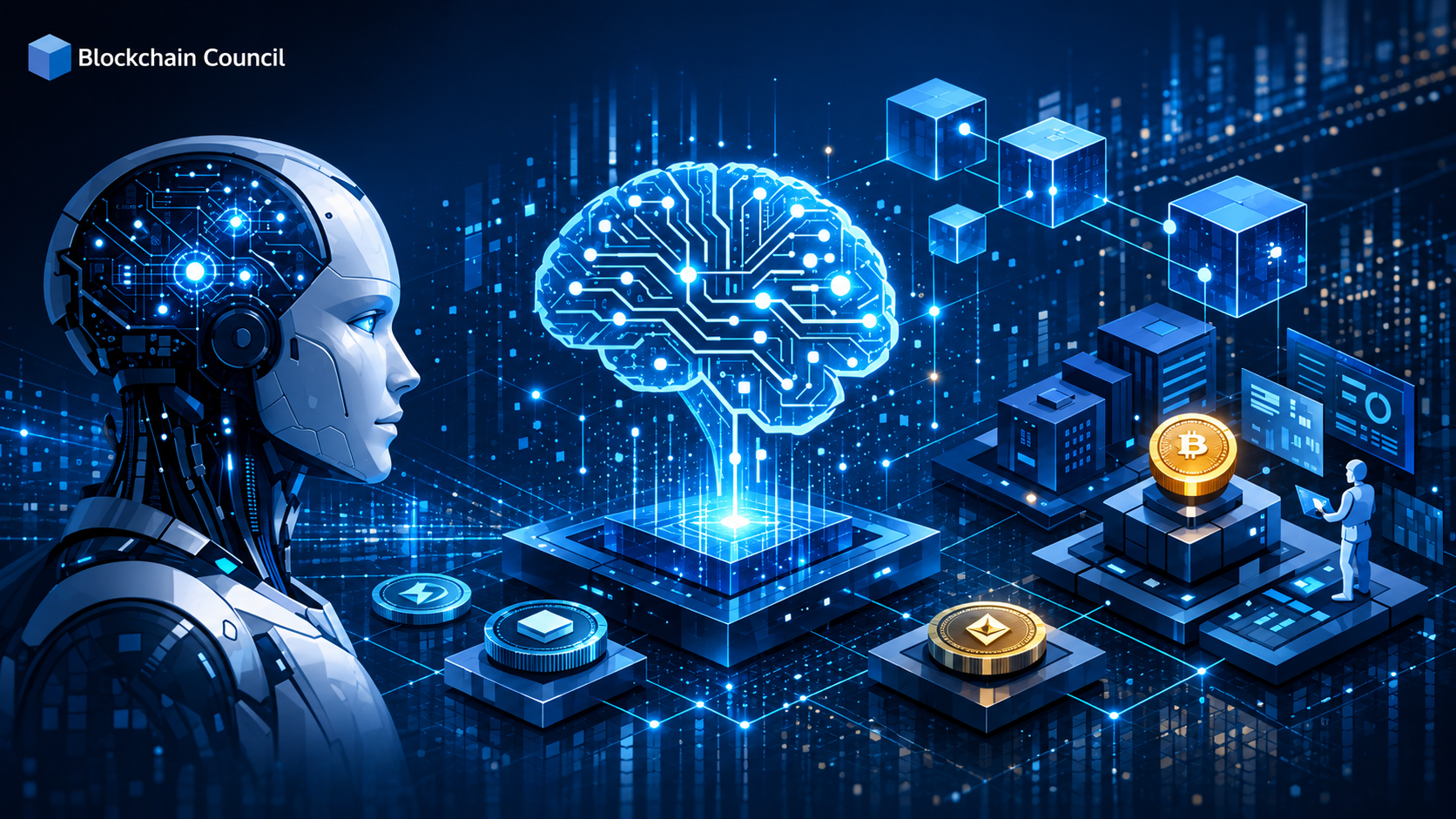
AI Agents Are Quietly Moving Into Crypto Infrastructure — And It May Change How Digital Economies Operate
AI agents are increasingly moving into blockchain and crypto infrastructure. This analysis explores how autonomous systems could reshape digital economies, liquidity coordination, and decentralized finance.
By Val Andrew | chainintellectcoin.com | May 27, 2026
Val Andrew covers AI systems, blockchain infrastructure, and digital financial markets.
AI Agents Are Expanding Beyond Chatbots and Automation Tools
For years, AI systems were primarily associated with:
- chat interfaces
- recommendation engines
- search optimization
- enterprise automation
That perception is changing rapidly.
Today, AI agents increasingly interact with:
- blockchain infrastructure
- digital payment systems
- decentralized applications
- tokenized liquidity networks
- autonomous coordination environments
A structural shift is emerging:
AI agents are beginning to operate inside crypto infrastructure itself—not merely alongside it.
This raises a deeper institutional question:
what happens when autonomous software systems begin interacting directly with digital economies?
From Passive Software to Autonomous Coordination Systems
Historically, blockchain systems relied primarily on:
- human wallet interactions
- manually executed governance
- static smart-contract logic
- user-directed liquidity movement
AI-driven systems introduce a different model:
- autonomous transaction coordination
- adaptive liquidity management
- machine-assisted governance systems
- predictive infrastructure optimization
digital economies become increasingly machine-coordinated—not purely user-driven
📊 The Mechanism
AI-agent infrastructure expands through:
- autonomous execution systems → software agents interact directly with blockchain networks
- machine-coordinated liquidity behavior → AI systems optimize transactions and digital asset movement dynamically
- adaptive decentralized infrastructure → blockchain environments increasingly respond to automated decision systems in real time
As AI-agent ecosystems expand, blockchain infrastructure may increasingly support machine-to-machine economic coordination rather than only human-driven activity.
Major technology firms, infrastructure providers, and blockchain developers continue exploring how autonomous AI systems could interact with digital financial environments.
📉 The Constraint
AI-agent infrastructure still operates within major constraints:
- smart-contract security risks
- regulatory uncertainty
- governance accountability concerns
- interoperability limitations
- operational transparency challenges
But institutional focus is increasingly shifting away from whether AI agents will participate in digital economies—
and toward how autonomous these systems may eventually become
Governments, infrastructure providers, and financial regulators globally continue expanding discussions around autonomous systems, AI governance, and machine-led operational accountability.
The Institutional Shift
Companies such as OpenAI, NVIDIA, Coinbase, and Microsoft increasingly operate within environments shaped by:
- AI infrastructure expansion
- digital-agent coordination systems
- blockchain integration research
- autonomous software development
Meanwhile, organizations such as the World Economic Forum and the Organisation for Economic Co-operation and Development continue evaluating how AI agents could influence governance, labor systems, digital finance, and infrastructure coordination.
Efficiency vs Autonomous-System Risk
As AI-agent infrastructure expands:
- blockchain coordination may become faster
- liquidity systems can become more adaptive
- digital economies may operate more continuously across networks
However:
- autonomous systems may introduce governance complexity
- accountability could become harder to assign during failures
- machine-coordinated behavior may amplify systemic instability during disruptions
This creates a key structural tradeoff:
digital economies become more operationally adaptive—but potentially more dependent on autonomous machine coordination
The Economic Participation Shift
As AI-agent infrastructure expands, portions of digital commerce and financial coordination may increasingly occur between autonomous systems rather than direct human participants.
This could reshape:
- digital labor participation
- automated commerce systems
- financial decision-making processes
- operational coordination across digital platforms
In highly automated environments, AI systems may increasingly manage liquidity movement, transaction execution, and infrastructure coordination with reduced direct human involvement.
This introduces a broader implication:
future digital economies may increasingly depend on how humans and autonomous systems coexist inside machine-coordinated financial environments
The Geopolitical Layer
AI-agent infrastructure may also reshape competition between:
- technology companies
- blockchain ecosystems
- national AI strategies
- digital financial platforms
Countries and institutions capable of integrating AI coordination systems into blockchain infrastructure may gain strategic advantages in automation, digital commerce, and programmable financial systems.
This creates a broader implication:
future digital economies may increasingly depend on how effectively AI systems coordinate value, liquidity, and infrastructure across decentralized environments
The Deeper Insight
AI agents are no longer only software assistants.
They are increasingly becoming operational participants inside digital financial infrastructure itself.
machine-coordinated economic activity may become part of mainstream digital-market architecture—not merely an experimental crypto concept
Where ChainIntellect Coin Fits Into the Broader Shift
Projects such as reflect the broader industry transition toward intelligent blockchain infrastructure, where autonomous coordination systems, programmable liquidity, and decentralized digital ecosystems increasingly shape how value moves across next-generation financial networks.
As AI-agent ecosystems expand, infrastructure-focused blockchain projects may become increasingly relevant to how machine-coordinated digital economies evolve.