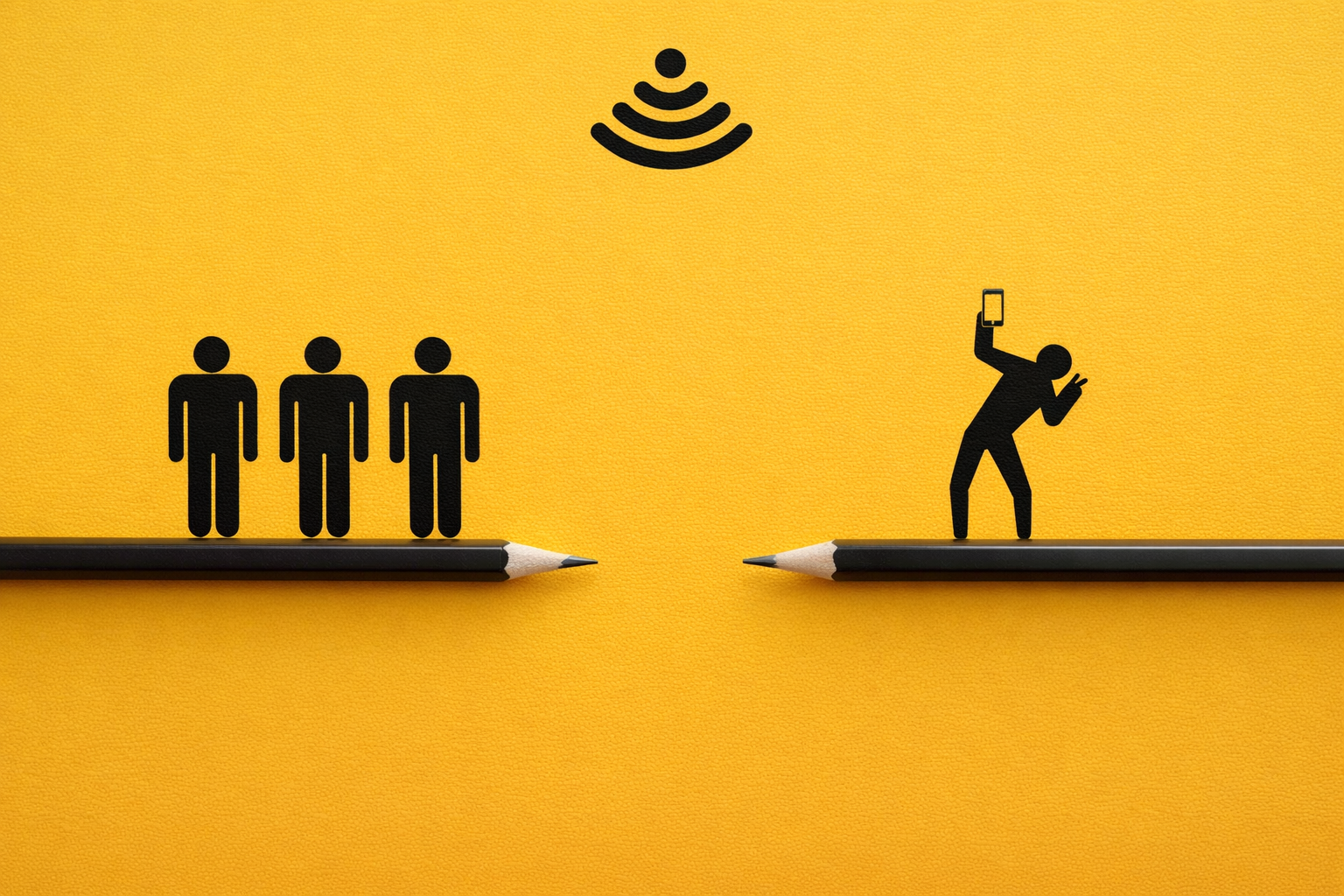
AI Could Make Global Inequality Worse — And the Shift Has Already Begun
AI is transforming the global economy—but its benefits may not be evenly distributed. This analysis explores how infrastructure access could shape inequality worldwide.
By Val Andrew | chainintellectcoin.com | April 19, 2026
Val Andrew is an independent researcher covering artificial intelligence systems, global digital infrastructure, and the distribution of economic power in emerging technologies.
A Shift That May Not Benefit Everyone
Artificial intelligence is often described as a transformative force for the global economy.
It promises efficiency, innovation, and new opportunities.
But a growing body of analysis suggests a more uneven outcome:
AI may concentrate economic power rather than distribute it.
And in some cases, that shift may already be underway.
Technology Has Always Been Uneven
Historically, major technological shifts have produced both growth and imbalance.
Industrialization, globalization, and digitization all created:
- significant economic expansion
- productivity gains
- but also uneven distribution of benefits
Research from World Economic Forum and International Monetary Fund suggests AI may follow a similar trajectory—potentially at a faster pace.
The difference is speed and scale.
📊 The Scale of the Gap
Recent trends indicate a growing disparity:
- advanced economies are capturing a disproportionate share of AI investment
- infrastructure development is concentrated in a limited number of regions
- access to compute and data remains uneven globally
This creates a structural divide:
those who build AI systems vs those who depend on them
Real-World Example: Infrastructure Concentration
The distribution of AI infrastructure highlights this imbalance.
Regions such as:
- North America
- parts of Europe
- select areas in Asia
have dense concentrations of:
- data centers
- high-performance compute resources
- capital investment
Meanwhile, many developing regions face:
- limited infrastructure
- restricted access to capital
- dependency on external platforms
This creates a global dynamic where:
innovation clusters in a few regions, while others remain consumers.
Human Impact: Opportunity vs Dependence
The consequences extend beyond economics.
For individuals:
- access to AI tools may increase productivity
- but lack of infrastructure limits participation in value creation
For businesses:
- companies in infrastructure-rich regions scale faster
- others may depend on external systems
This shifts the balance from:
participation → dependency
A Sharper Counterpoint
Not all analysts agree that inequality will increase long term.
Some point to:
- open-source AI models
- decreasing costs of technology over time
- global access to digital tools
In this view, AI could democratize access to advanced capabilities.
However, others caution:
access to tools is not the same as access to infrastructure.
capability—not availability—may define economic advantage.
📉 Why This Shift Is Not Fully Visible
Despite strong signals, inequality remains under-discussed in AI narratives.
1. Focus on innovation
Most attention remains on capabilities and breakthroughs.
2. Delayed economic effects
Distributional changes take time to become measurable.
3. Measurement challenges
Digital inequality is harder to quantify than traditional metrics.
The Deeper Insight
AI is often framed as a universal technology.
But its benefits may not be universally distributed.
In the AI economy, inequality may not come from lack of access—but from unequal capability.
Access alone does not create power—control does.
Broader Implications
If current trends continue:
- economic power may concentrate further
- global competition may intensify
- digital inequality may become more pronounced
This represents a shift from:
global digital access → unequal digital capability
The Bottom Line
AI is not just transforming technology.
It is reshaping economic distribution.
- those with infrastructure gain leverage
- those without it face structural limits
- value may concentrate rather than spread
Most discussions focus on what AI can do.
Fewer focus on who benefits from it.