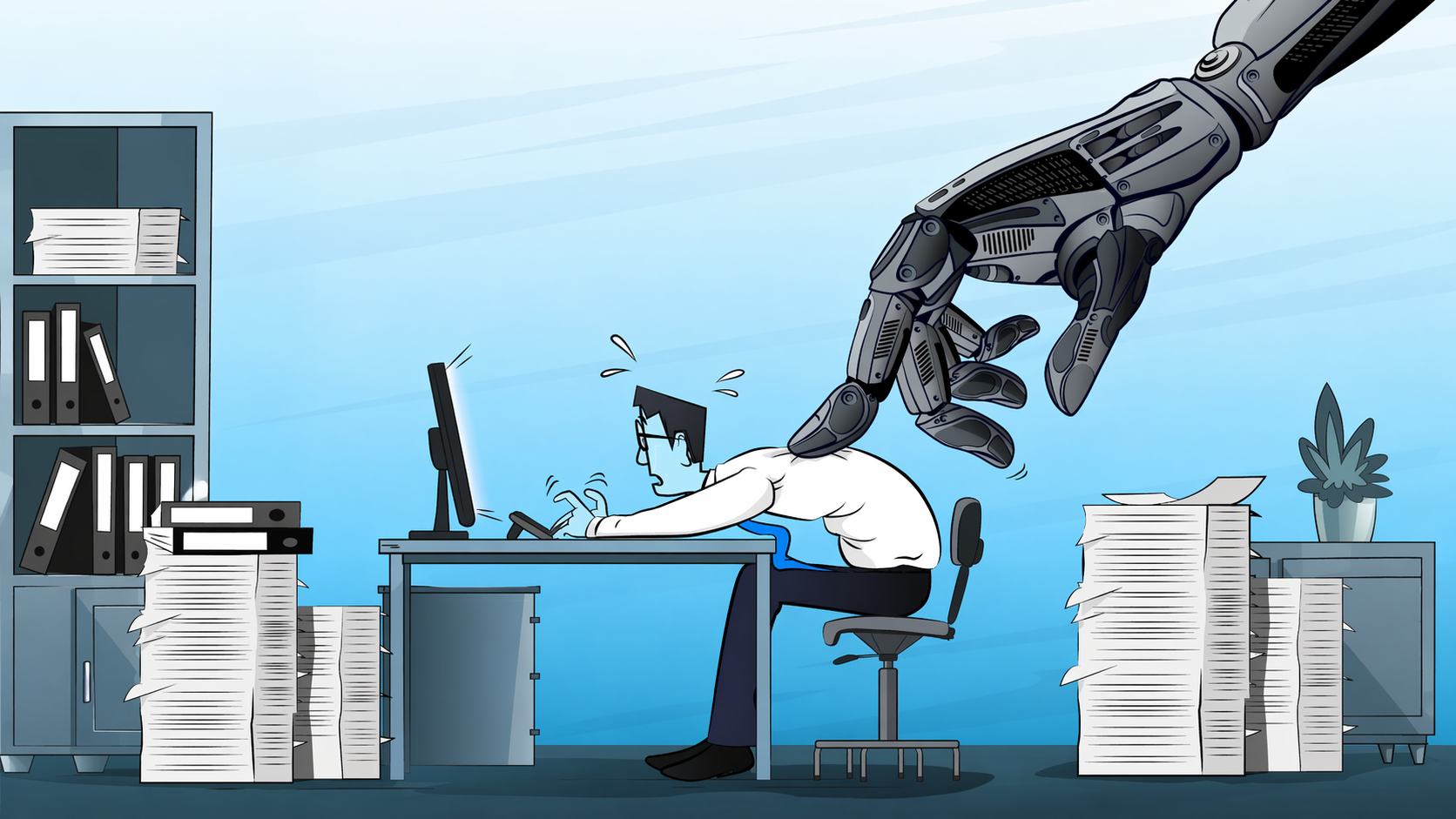
AI Is Replacing Jobs — But the Bigger Risk Is Who Gets the Value
AI is reshaping jobs—but the bigger issue may be who captures the value. This analysis explores how automation is changing the structure of work and economic distribution.
By Val Andrew | chainintellectcoin.com | April 22, 2026
Val Andrew is an independent researcher covering artificial intelligence systems, labor economics, and the structural impact of automation on global markets.
The Question Everyone Is Asking
The dominant conversation around AI is clear:
Will AI replace human jobs?
Across industries, early signals suggest:
- automation is accelerating
- roles are evolving rapidly
- certain functions are already being reduced
But focusing only on job loss may miss the deeper shift.
The Real Change Isn’t Jobs — It’s Structure
AI is not just replacing workers.
It is changing how work is organized, valued, and distributed.
Unlike previous automation waves:
- AI affects both cognitive and operational tasks
- it applies across multiple industries simultaneously
- it scales faster than labor markets can adapt
Insights from World Economic Forum and International Monetary Fund suggest:
the pace of transformation may exceed historical adaptation cycles.
📊 The Scale Signal: Tasks Are Being Automated
Emerging estimates indicate:
- a significant share of tasks across industries could be affected by automation
- repetitive and structured tasks are increasingly handled by AI systems
- augmentation is spreading alongside replacement
This creates a key dynamic:
tasks are changing faster than roles can adapt
Real-World Example: Roles Are Fragmenting
The impact is already visible across sectors.
In areas such as:
- customer support
- content creation
- administrative operations
AI systems are:
- handling routine interactions
- generating structured outputs
- reducing the need for repetitive human input
Companies integrating AI—including Microsoft and Google—are not simply removing jobs.
They are restructuring workflows around human-AI collaboration.
The Hidden Risk: Value Distribution
The deeper issue is not employment levels.
It is who captures the value created by AI.
If productivity increases but:
- capital owners capture most gains
- wages lag behind efficiency
- access to AI tools remains uneven
then inequality may rise—even without mass unemployment.
A Sharper Counterpoint
Not all projections are pessimistic.
Some economists argue:
- productivity gains could drive economic expansion
- new industries may emerge
- wage growth may follow technological progress
In this view, AI could ultimately increase overall prosperity.
However, the outcome depends on how value is distributed.
📉 Why This Shift Is Misunderstood
The conversation focuses on job numbers.
But structural change is harder to measure.
1. Jobs vs tasks
AI reshapes tasks within roles, not just entire jobs.
2. Short-term vs long-term
Displacement is immediate—creation is gradual.
3. Ownership vs participation
Value depends on who controls systems, not just who works within them.
The Deeper Insight
AI is not just a labor issue.
It is a system-level economic transformation.
In the AI economy, the key divide may not be employment—but ownership.
Broader Implications
If current trends continue:
- labor markets may become more fluid
- traditional job structures may weaken
- economic power may shift toward infrastructure and capital owners
This represents a shift from:
job-based economy → system-based productivity economy
The Bottom Line
AI is changing more than employment.
It is reshaping economic structure.
- work becomes modular
- value becomes concentrated
- adaptation becomes critical
Most discussions focus on jobs.
Fewer focus on who captures the value AI creates.