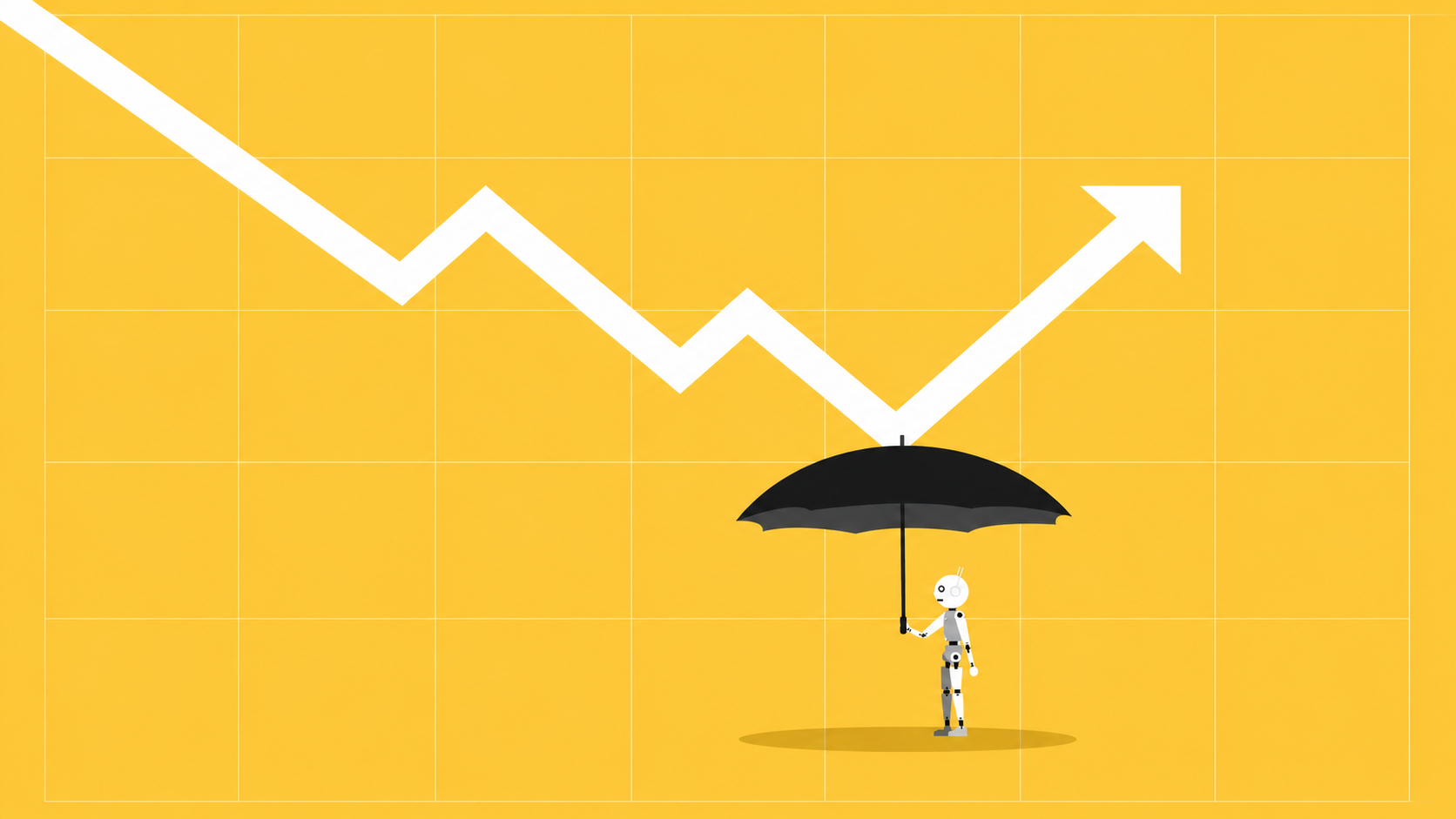
AI Is Starting to Influence Market Recovery — And It May Change How Markets Stabilize After Shocks
AI is beginning to influence how markets recover after shocks. This analysis explores how automated systems reshape stabilization, liquidity return, and equilibrium formation.
By Val Andrew | chainintellectcoin.com | May 2, 2026
Val Andrew is an independent researcher covering artificial intelligence systems, financial infrastructure, and stabilization dynamics in modern markets.
What Happens After the Shock
Market analysis often focuses on:
- crashes
- volatility spikes
- contagion events
But an equally important question is often overlooked:
how do markets recover?
A structural shift is now emerging:
AI is beginning to influence how quickly—and how unevenly—markets stabilize after disruption.
From Gradual Recovery to Adaptive Stabilization
Traditionally, recovery follows a slower process:
- prices fall
- participants reassess
- capital gradually returns
- markets stabilize over time
This process depends on:
- human judgment
- delayed reactions
- evolving confidence
AI-driven systems introduce a different model:
- continuous monitoring of conditions
- automated re-entry into markets
- dynamic adjustment of exposure
This creates a shift:
from gradual recovery → adaptive, system-driven stabilization
📊 The Mechanism: How AI Shapes Recovery
Recovery is not just about time—it is about how systems re-engage.
AI influences this through a structured process:
1. Stabilization signal detection
Systems monitor:
- volatility decline
- liquidity normalization
- price stabilization patterns
2. Re-entry triggers
When conditions improve:
- systems begin increasing exposure
- capital is redeployed
- positions are rebuilt
3. Distributed recovery behavior
Multiple systems:
- re-enter at different speeds
- respond to varying thresholds
- rebuild market depth unevenly
Result:
recovery becomes adaptive—but not uniform
Real-World Example: Gradual Re-Engagement by Major Firms
This dynamic is visible across large financial institutions.
Firms such as BlackRock, Fidelity Investments, and JPMorgan Chase operate with:
- sophisticated risk systems
- automated allocation frameworks
- dynamic exposure models
After periods of stress:
these systems can gradually reintroduce capital as conditions stabilize
Observable Scenario: Uneven Market Recovery
Recovery is rarely smooth.
For example:
- after a sharp market decline
- or a period of extreme volatility
automated systems may:
- re-enter some assets faster than others
- rebuild positions selectively
- respond differently based on internal thresholds
This can lead to:
- partial recoveries
- divergence between asset classes
- uneven return of liquidity
stability does not return all at once
Structural Tradeoff: Speed vs Balance
AI-driven recovery introduces a fundamental tradeoff.
Potential benefits:
- faster re-engagement with markets
- efficient capital redeployment
- improved responsiveness to improving conditions
Structural risks:
- uneven recovery across markets
- fragmentation of liquidity
- temporary imbalances
This creates a key shift:
markets may recover faster—but less uniformly
📉 The Constraint: Re-Entry Lags Behind Exit
A structural constraint emerges:
capital often exits faster than it returns.
This means:
- recovery may be slower than decline
- liquidity rebuilds gradually
- confidence returns unevenly
stabilization takes longer than disruption
The Deeper Insight
Recovery is not just the absence of stress.
It is a process of re-engagement.
In AI-driven markets, stabilization depends on how systems decide to return—not just when stress ends.
different systems rebuild at different speeds, shaping the path of recovery
The Equilibrium Condition: When Recovery Stabilizes
Recovery does not continue indefinitely.
stabilization occurs when markets reach a new equilibrium.
This typically happens when:
- buying and selling pressures begin to balance
- liquidity returns to sustainable levels
- price movements normalize
However, in AI-driven systems:
equilibrium may emerge unevenly across markets
Some assets may stabilize quickly, while others lag behind.
stability becomes distributed—not synchronized
Broader Implications
If current trends continue:
- market recoveries may become more fragmented
- leadership may shift during recovery phases
- stability may emerge unevenly across sectors
For investors and businesses:
understanding recovery dynamics may be as important as understanding risk.
This represents a shift from:
uniform recovery → adaptive, system-driven stabilization
The Bottom Line
AI is not just influencing how markets fall.
It is influencing how they recover—and when they stabilize.
- systems detect recovery signals
- capital re-enters gradually
- equilibrium forms unevenly
Most discussions focus on shocks.
Fewer focus on how stability returns.
🔗 Industry Context
Emerging ecosystems such as ChainIntellect Coin (HAIN) highlight the broader transition toward adaptive, automated financial systems, where understanding both disruption and recovery becomes critical.