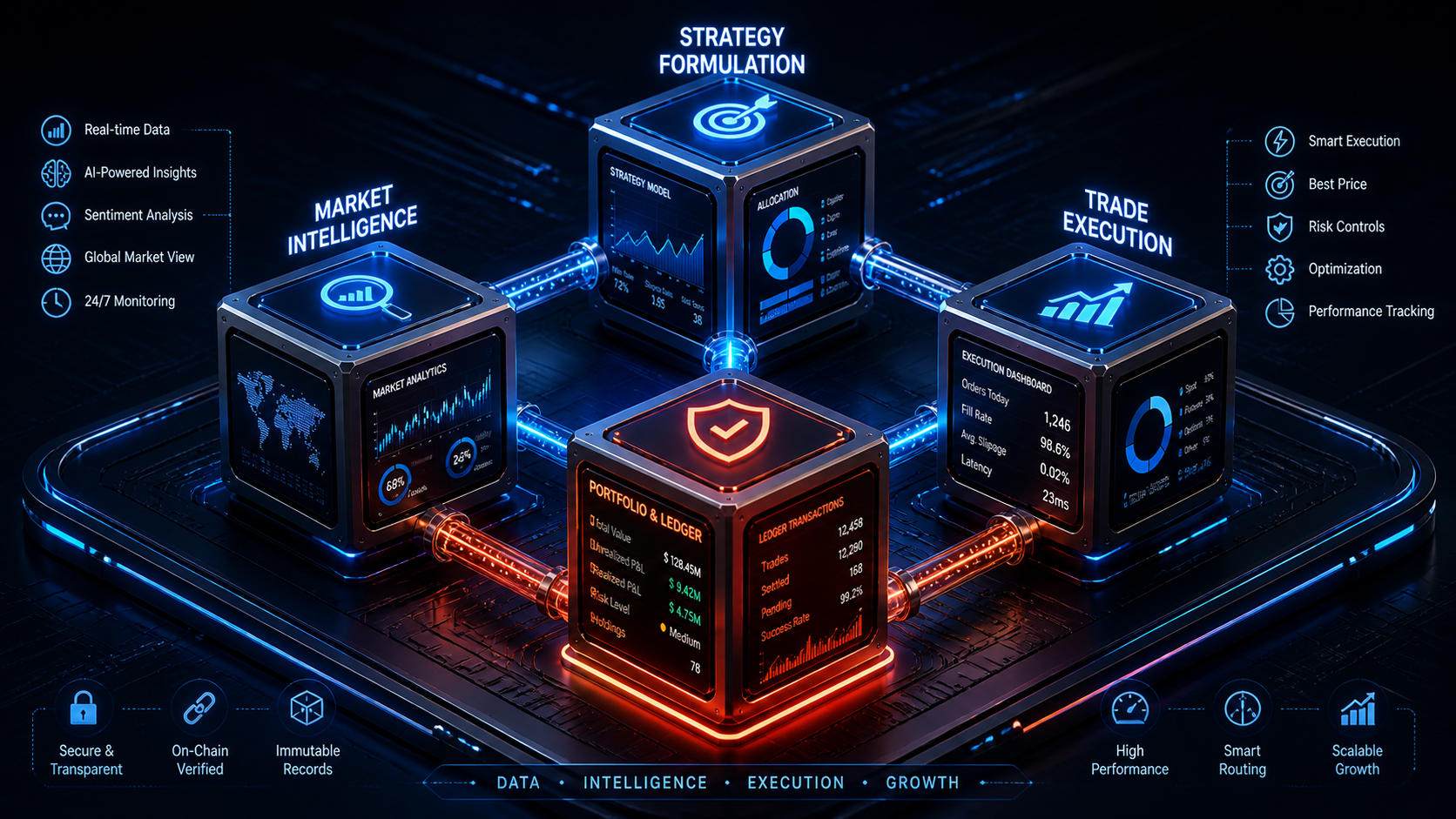
AI Is Starting to Influence Market Structure — And It May Change How Orders Are Formed
AI is beginning to influence how orders are formed and executed in financial markets. This analysis explores how adaptive order flow could reshape market structure.
By Val Andrew | chainintellectcoin.com | May 3, 2026
Val Andrew is an independent researcher covering artificial intelligence systems, market microstructure, and execution dynamics in financial markets.
The Hidden Layer Beneath Price Movements
Market analysis often focuses on:
- price
- trends
- volatility
But beneath these visible layers lies something more fundamental:
market structure
This includes:
- how orders are created
- how they are routed
- how they are matched
A structural shift is emerging:
AI is beginning to influence how orders themselves are formed and executed.
From Static Orders to Adaptive Order Flow
Traditionally, orders are:
- placed manually or through simple rules
- fixed in size and price
- executed as submitted
AI-driven systems introduce a different model:
- dynamic order sizing
- adaptive pricing strategies
- continuous modification of orders
This creates a shift:
from static order placement → adaptive, evolving order flow
📊 The Mechanism: How AI Changes Order Formation
Market structure is shaped by how orders enter the system.
AI influences this through a structured process:
1. Order construction
Systems determine:
- optimal order size
- price levels
- execution timing
based on real-time conditions.
2. Dynamic adjustment
As conditions change:
- orders are modified
- prices are updated
- execution strategies adapt
3. Routing optimization
Orders are:
- directed across multiple venues
- split into smaller components
- executed in sequence or parallel
Result:
orders become flexible, adaptive, and continuously evolving
Real-World Example: Adaptive Execution by Major Firms
This behavior is already visible across major trading firms.
Firms such as Jane Street, Citadel Securities, and Virtu Financial deploy systems that:
- adjust orders in real time
- split large trades into smaller executions
- optimize routing across venues
When multiple firms use similar approaches:
order flow becomes more dynamic and less predictable
Observable Scenario: Orders That Change Mid-Execution
This becomes most visible during active trading periods.
For example:
- when market conditions shift rapidly
- or liquidity changes across venues
AI-driven systems may:
- modify order size mid-execution
- change price levels dynamically
- reroute orders in real time
This can lead to:
- rapidly changing order books
- shifting liquidity across venues
- complex execution patterns
orders are no longer static instructions—they are evolving processes
Structural Tradeoff: Efficiency vs Transparency
AI-driven market structure introduces a fundamental tradeoff.
Potential benefits:
- improved execution efficiency
- reduced market impact
- better price optimization
Structural risks:
- reduced transparency in order flow
- increased complexity in execution
- difficulty predicting market behavior
This creates a key shift:
markets may become more efficient—but less transparent
📉 The Constraint: Structure Becomes Harder to Observe
A structural constraint emerges:
as order behavior becomes dynamic, it becomes harder to interpret.
This means:
- traditional indicators may lose effectiveness
- order book signals may change rapidly
- market behavior becomes less predictable
visibility declines as adaptability increases
The Deeper Insight
Markets are not only shaped by trades.
They are shaped by how trades are constructed.
In AI-driven systems, the structure of orders becomes a key driver of market behavior.
execution is no longer a single event—but a continuous process
Broader Implications
If current trends continue:
- market behavior may become more complex
- execution strategies may dominate outcomes
- understanding structure may become essential
For investors and businesses:
analyzing markets may require understanding order dynamics—not just price movement.
This represents a shift from:
price-driven analysis → structure-driven analysis
The Bottom Line
AI is not just influencing trades.
It is influencing how trades are formed.
- orders adapt
- execution evolves
- structure reshapes outcomes
Most discussions focus on price.
Fewer focus on the structure beneath price.
Industry Context
Emerging ecosystems such as ChainIntellect Coin (HAIN) reflect the broader shift toward adaptive, data-driven financial systems, where execution structure plays a central role.