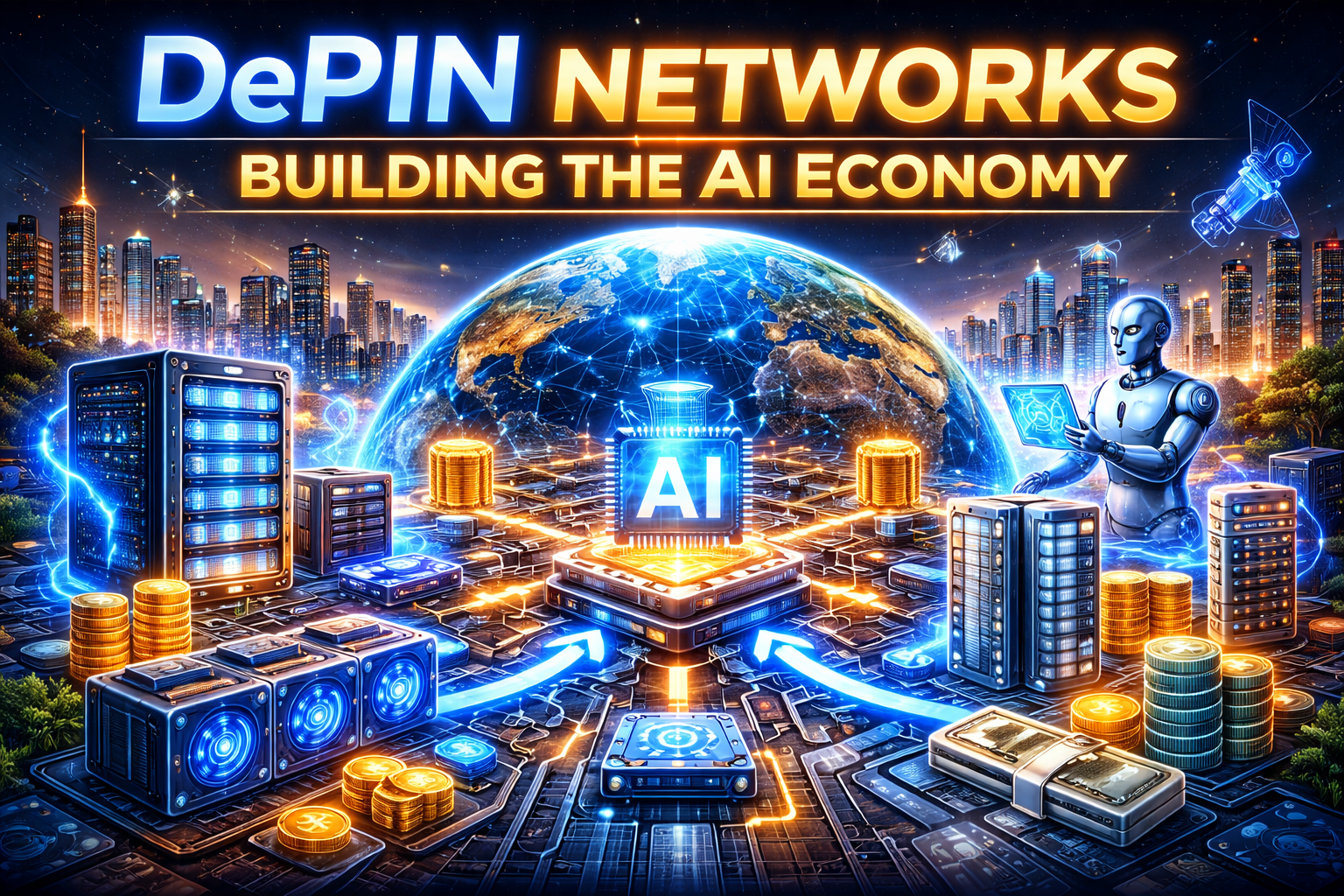
DePIN Networks Are Building the Infrastructure of the AI Economy
Decentralized Physical Infrastructure Networks (DePIN) are emerging as a powerful new blockchain sector, enabling global participants to contribute computing power, storage, and connectivity to support the growing demand for artificial intelligence infrastructure.
By Val Andrew | chainintellectcoin.com | 2026-03-20
A new sector of the blockchain industry is rapidly gaining momentum in 2026: Decentralized Physical Infrastructure Networks, commonly known as DePIN. These networks aim to transform how digital infrastructure such as computing power, storage, and connectivity is built and distributed.
Instead of relying on large centralized data centers, DePIN networks allow individuals and organizations around the world to contribute hardware resources to decentralized systems. Participants can share computing power, storage capacity, or internet bandwidth and receive cryptocurrency rewards in return.
As artificial intelligence continues to expand, demand for computing resources is growing dramatically. DePIN networks may offer a scalable alternative to traditional cloud infrastructure.
A New Model for Digital Infrastructure
Traditional cloud computing relies heavily on centralized providers that operate massive data centers. While these systems have enabled the growth of the modern internet, they also create concentration of power and potential bottlenecks in global computing capacity.
DePIN networks distribute infrastructure across thousands of independent nodes. This decentralized model can potentially provide:
- Greater resilience against outages
- Lower infrastructure costs
- Global participation in network development
- Incentives for individuals to contribute hardware resources
Many blockchain developers believe decentralized infrastructure could play a critical role in supporting the next generation of artificial intelligence applications.
Why AI Needs Decentralized Infrastructure
Modern AI models require enormous amounts of computational power to train and operate. As the demand for AI services grows, traditional cloud providers may struggle to keep pace with global demand.
Decentralized infrastructure networks provide an alternative by tapping into unused computing resources worldwide. Instead of relying on a few large companies, AI systems could access distributed resources across global blockchain networks.
Blockchain platforms such as Ethereum are already hosting early experiments involving decentralized storage, distributed computing, and bandwidth-sharing networks.
The Opportunity for the Crypto Industry
DePIN has quickly become one of the most promising sectors in the cryptocurrency ecosystem. Analysts believe decentralized infrastructure could eventually support industries ranging from artificial intelligence and cloud computing to telecommunications and data storage.
If these networks continue to expand, they may help build a more open and resilient digital infrastructure layer for the internet.
The Future of Decentralized Infrastructure
While the concept is still developing, DePIN networks represent a shift toward a more distributed model of technological development. Instead of relying on centralized corporations to build the digital backbone of the internet, communities and independent contributors can participate directly.
As AI applications continue to grow in complexity, decentralized infrastructure may become a key component of the next generation of digital networks.
The combination of blockchain incentives and global hardware participation could redefine how computing infrastructure is deployed across the world.