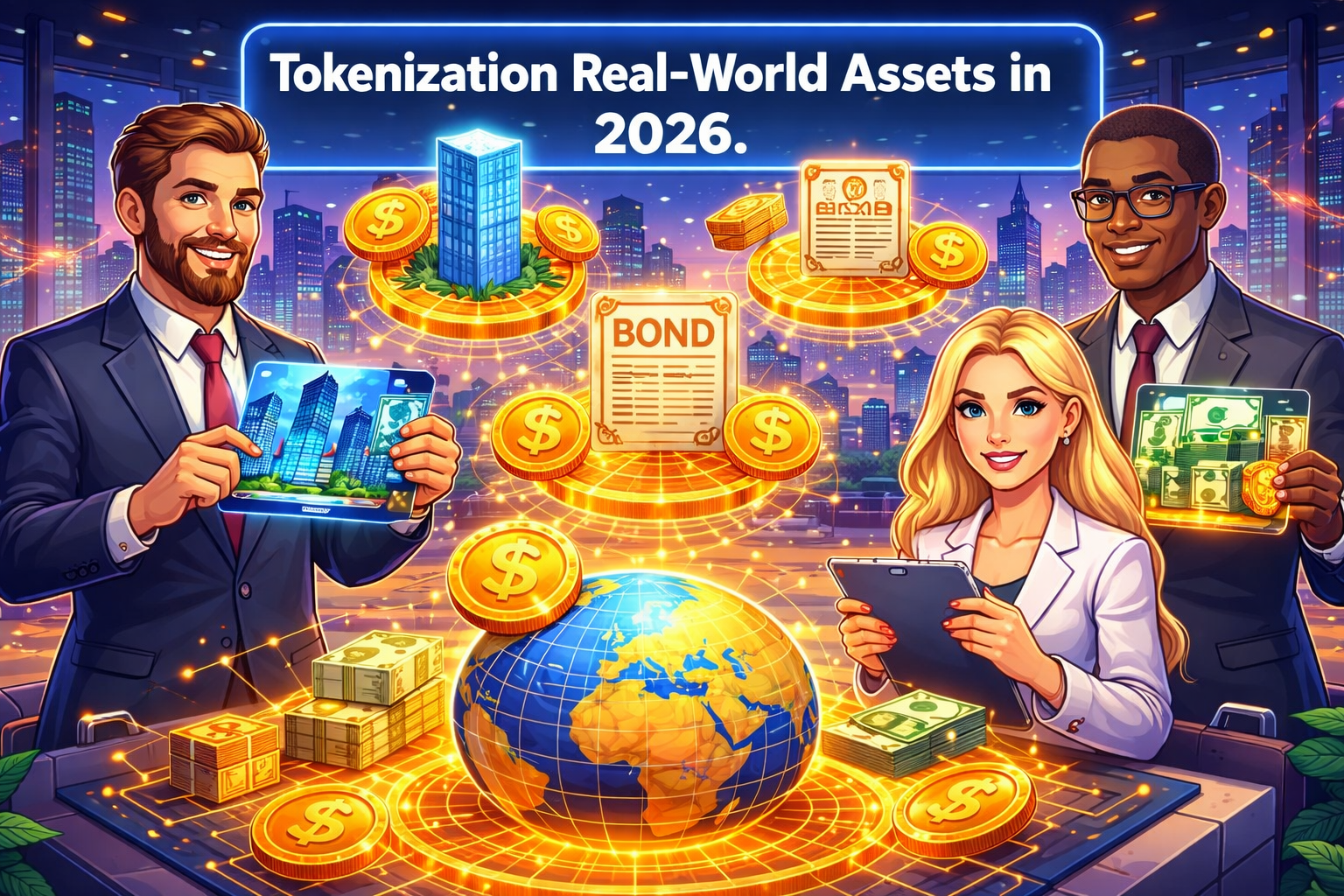
Institutional Capital Drives Growth of Tokenized Real-World Assets in 2026
Institutional investors are accelerating the adoption of tokenized real-world assets, with trillions in value expected to move onto blockchain infrastructure.
By Val Andrew | chainintellectcoin.com | 2026-03-17
Institutional capital is playing a growing role in the expansion of tokenized real-world assets (RWAs) in 2026, as financial firms increasingly explore blockchain-based infrastructure for traditional investments.
Asset managers, banks, and fintech companies are moving beyond pilot programs and actively deploying tokenized financial products, signaling a shift toward broader adoption.
📊 Institutional Adoption Expands
Major financial institutions are beginning to integrate tokenization into their digital asset strategies.
Recent developments include:
Tokenized government bonds and treasury products
Blockchain-based money market funds
Tokenized private credit and real estate assets
These initiatives demonstrate how traditional finance is gradually transitioning toward blockchain-enabled systems.
What Are Tokenized Real-World Assets?
Tokenized real-world assets represent ownership or rights to physical or financial assets — such as real estate, commodities, or bonds — on blockchain networks.
This allows assets to be:
Digitized and easily transferred
Divided into fractional ownership
Traded more efficiently across global markets
Tokenization aims to reduce friction in traditional financial systems.
Real-World Developments
Several practical applications are already shaping the market:
Tokenized U.S. Treasury products offering faster settlement
Real estate assets converted into tradable digital shares
Private credit markets expanding through blockchain platforms
These developments highlight increasing confidence in blockchain as a financial infrastructure layer.
📈 Market Size and Growth Projections
Industry estimates suggest that tokenized real-world assets could reach trillions of dollars in value over the next decade, reflecting strong institutional interest and expanding use cases.
This growth is driven by demand for more efficient, accessible, and transparent financial systems.
Challenges and Risks
Despite strong momentum, several challenges remain:
Regulatory uncertainty across jurisdictions
Liquidity limitations in emerging markets
Legal and compliance complexities
These factors may influence the pace of adoption.
Role of Blockchain Ecosystems
Blockchain platforms are evolving to support tokenized assets through programmable financial infrastructure and decentralized systems.
Projects such as ChainIntellectCoin (HAIN) are exploring how tokenization can integrate with AI-driven and decentralized environments to support next-generation financial applications.
Industry Outlook
As institutional participation increases, tokenization is expected to play a central role in the modernization of financial markets.
By enabling more efficient asset management and broader access to investments, tokenized systems could reshape how value is stored and exchanged.
Conclusion
The growing involvement of institutional capital marks a key phase in the development of tokenized real-world assets.
With trillions of dollars potentially moving onto blockchain infrastructure, this trend highlights a major evolution in the relationship between traditional finance and decentralized technology.