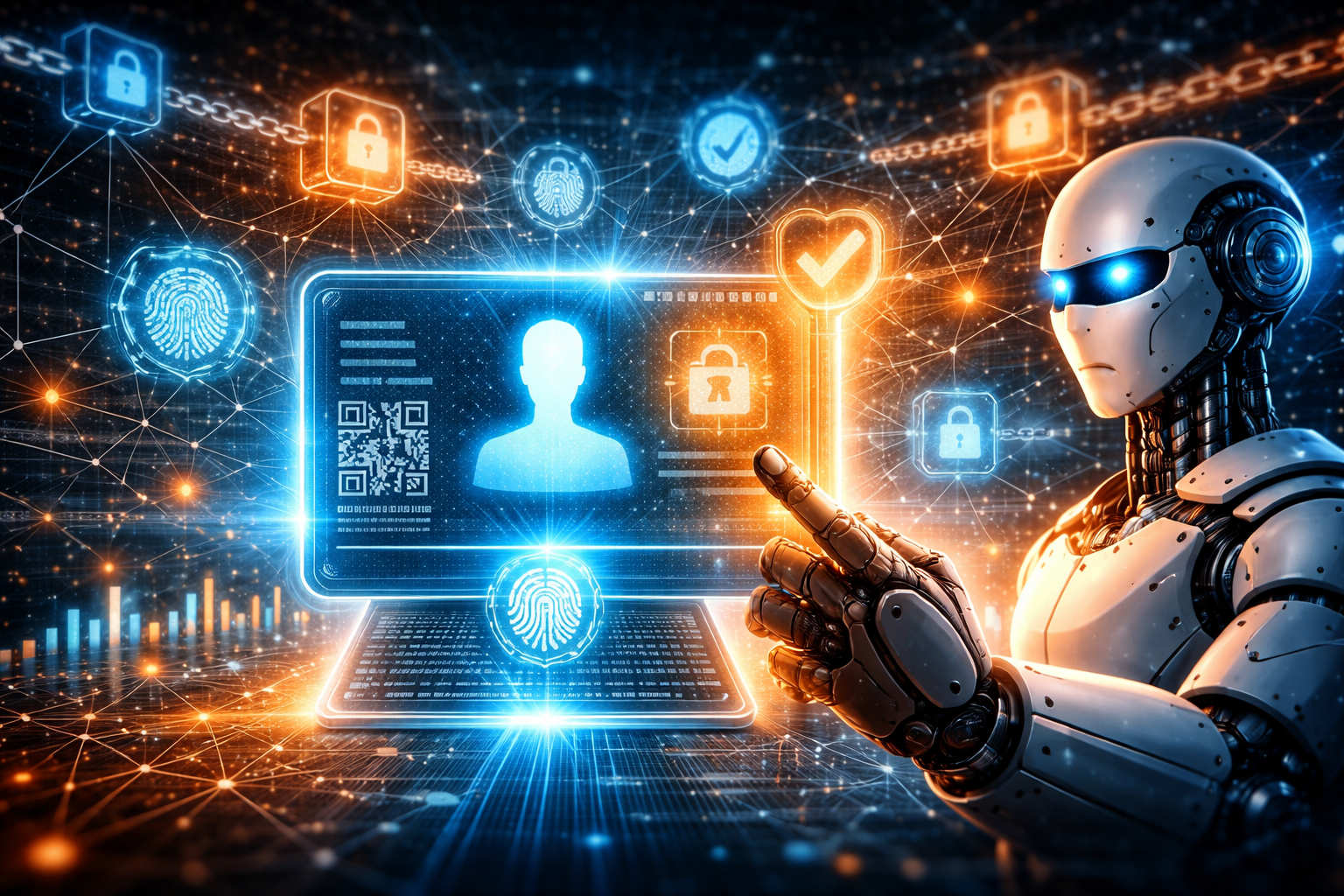
Self-Sovereign Identity Powered by AI and Blockchain Is Becoming a Global Standard in 2026
Self-sovereign identity powered by AI and blockchain is emerging in 2026, enabling secure, private, and decentralized digital identity systems across global platforms.
By Val Andrew | chainintellectcoin.com | March 27, 2026
A major shift is underway in how identity is managed online. In 2026, the convergence of artificial intelligence and blockchain is accelerating the adoption of self-sovereign identity (SSI)—a model where individuals control their own digital identity without relying on centralized platforms.
As digital interactions expand across finance, healthcare, and online services, the demand for secure, private, and verifiable identity systems is increasing rapidly.
Why Digital Identity Is Being Rebuilt
Traditional identity systems rely heavily on centralized databases, making them vulnerable to breaches, fraud, and misuse.
Self-sovereign identity introduces a decentralized alternative where:
- Users control their personal data
- Identity credentials are stored securely on blockchain
- Verification happens without exposing sensitive information
This model is gaining attention as governments and enterprises search for more secure identity solutions.
AI Enhances Identity Verification
Artificial intelligence is playing a critical role in improving identity systems.
AI-powered systems can:
- Detect fraud patterns in real time
- Verify biometric data
- Automate identity validation processes
When combined with blockchain, AI enables identity systems that are both intelligent and tamper-proof.
Blockchain as the Trust Layer
Blockchain technology provides the infrastructure needed to secure identity data.
Through cryptographic verification and decentralized storage, blockchain enables:
- Immutable identity records
- Permission-based data sharing
- Transparent verification processes
This creates a system where users can prove who they are without relying on centralized authorities.
The Rise of Global Identity Networks
As adoption increases, decentralized identity systems are evolving into global identity networks.
These networks could allow individuals to:
- Access financial services globally
- Verify identity across platforms
- Maintain privacy while interacting online
This represents a major step toward a more secure and interoperable digital ecosystem.
Insight
Digital identity is becoming the foundation of the digital economy. Without trust in identity systems, financial transactions, AI systems, and online services cannot scale effectively.
Blockchain introduces verifiable trust, while AI enables intelligent validation—together forming the backbone of next-generation identity systems.
Opinion
Val Andrew — Control over identity is one of the most important issues of the digital age. Centralized systems have repeatedly shown their limitations.
The shift toward self-sovereign identity is not just technological—it is philosophical. It represents a move toward giving individuals full ownership of their digital presence.
Prediction
By the end of 2026:
- Self-sovereign identity systems will be integrated into major financial platforms
- AI-driven identity verification will replace manual processes
- Blockchain-based identity will become a requirement for secure digital interactions
This could redefine how identity works across the global economy.
Conclusion
Self-sovereign identity powered by AI and blockchain is quickly becoming a critical component of the digital world.
As adoption grows, these systems could transform how individuals interact online—providing greater security, privacy, and control over personal data.