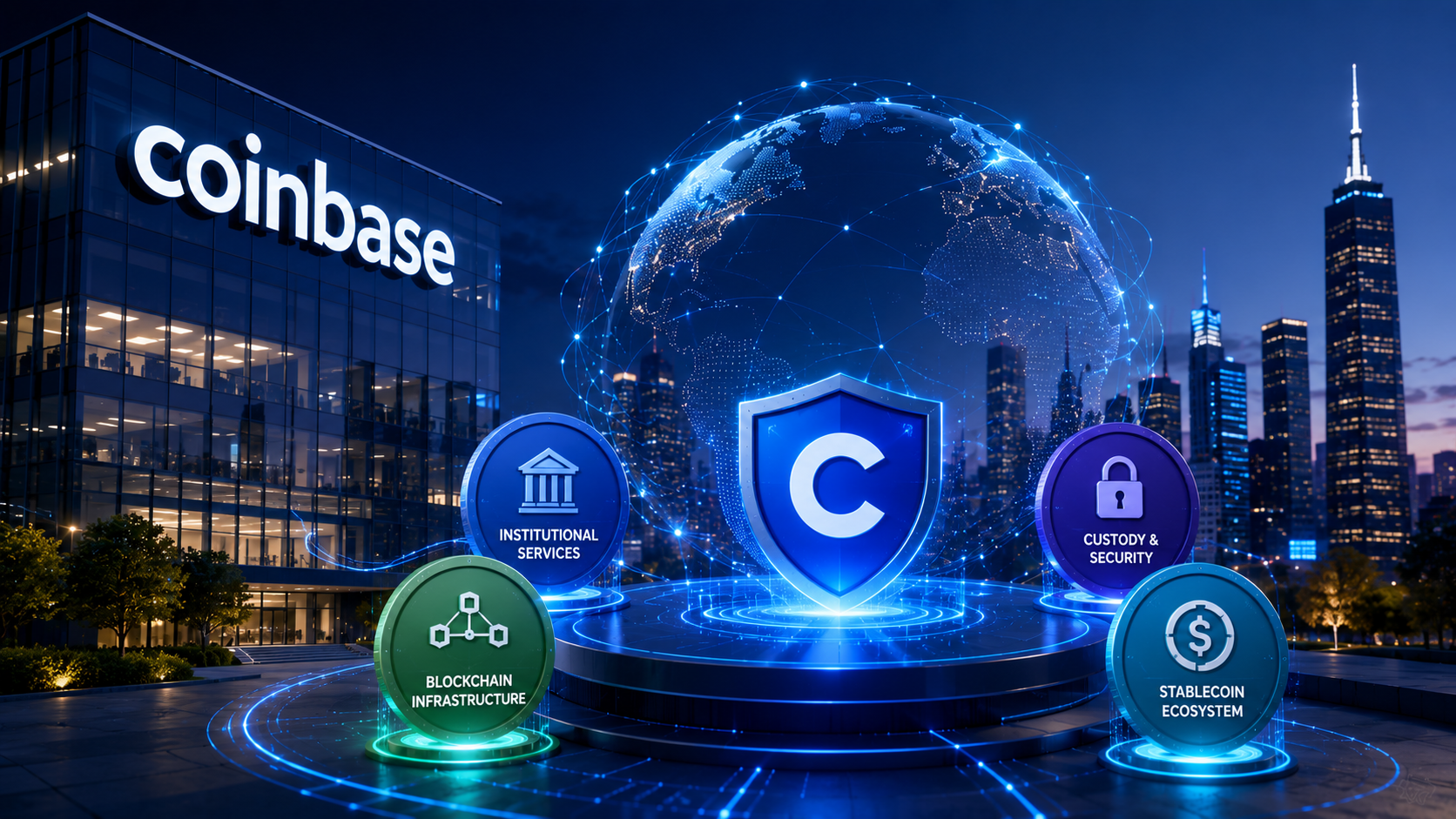
Why Coinbase Is Becoming More Than a Crypto Exchange
Coinbase is expanding beyond cryptocurrency trading into custody, stablecoins, institutional services, and financial infrastructure. This analysis explores why infrastructure may become the company's most important long-term opportunity.
By Val Andrew | chainintellectcoin.com | June 16, 2026
Val Andrew covers financial infrastructure, fintech innovation, digital assets, and capital markets.
The Coinbase Story Is Changing
For much of its history, Coinbase was viewed primarily as a cryptocurrency exchange.
Most discussions focused on:
- trading activity
- market cycles
- cryptocurrency prices
- retail participation
- exchange competition
Yet a different story has been quietly developing.
Increasingly, Coinbase is investing in infrastructure rather than simply trading services.
This raises an important question:
Could Coinbase's long-term future depend more on financial infrastructure than cryptocurrency trading?
The answer may reveal a broader shift occurring across digital finance.
Why Infrastructure Matters
Financial infrastructure often receives less attention than consumer products.
Most users think about:
- apps
- accounts
- transactions
- investments
Few think about:
- settlement systems
- custody networks
- payment rails
- liquidity infrastructure
- financial coordination layers
Yet these systems support global financial activity every day.
Historically, infrastructure providers often become some of the most important participants in financial markets.
The Historical Pattern
Many successful financial companies evolved beyond their original products.
Examples include:
- payment processors expanding into financial services
- exchanges developing infrastructure businesses
- banks investing in digital platforms
- technology firms building financial ecosystems
Infrastructure often becomes increasingly valuable as networks grow.
This pattern appears repeatedly throughout financial history.
Why Coinbase Matters
Coinbase remains one of the most recognized companies in the digital-asset industry.
Its significance extends beyond trading activity.
The company increasingly participates in areas such as:
- custody solutions
- institutional services
- blockchain infrastructure
- developer ecosystems
- digital financial networks
The broader implication is that cryptocurrency firms may increasingly resemble infrastructure companies rather than pure trading platforms.
Real-World Context
Coinbase operates within a rapidly evolving ecosystem that includes:
- Coinbase expanding digital financial infrastructure
- Circle growing stablecoin adoption through USDC
- Stripe exploring blockchain-based payments
- BlackRock evaluating tokenized financial products
- JPMorgan Chase investing in digital settlement systems
The result is increasing interaction between traditional finance and blockchain-based infrastructure.
The Infrastructure Opportunity
The digital economy depends on trusted systems.
Businesses require:
- custody
- security
- settlement
- compliance
- liquidity
As digital financial networks expand, infrastructure providers may become increasingly important.
The opportunity extends beyond cryptocurrency trading volume.
It involves supporting broader financial activity.
The Stablecoin Connection
One of the most significant developments involves stablecoins.
Digital dollars increasingly support:
- payments
- settlements
- treasury operations
- digital commerce
- cross-border transfers
As stablecoin ecosystems expand, infrastructure providers capable of supporting those systems may benefit from growing demand.
This is one reason infrastructure increasingly attracts institutional attention.
The Contrarian View
Many investors still evaluate digital-asset companies primarily through trading activity.
The larger story may involve infrastructure adoption.
Historically, the most durable financial businesses often provide services that remain essential regardless of market conditions.
Infrastructure can generate long-term relevance even when market cycles fluctuate.
This may be one reason digital-finance companies continue investing beyond trading products.
The Regulatory Factor
Infrastructure growth depends heavily on trust.
That includes:
- compliance
- transparency
- security
- operational standards
- regulatory oversight
The future of digital finance may depend not only on innovation but also on the ability to operate within evolving regulatory frameworks.
Infrastructure and trust often develop together.
The Global Competition
Financial centers increasingly compete to attract:
- capital
- innovation
- fintech development
- infrastructure investment
The ability to support modern digital financial systems may become a competitive advantage.
Future financial leadership may depend on infrastructure capabilities as much as market size.
The Deeper Insight
The most important financial transformations often occur beneath the surface.
Consumers notice applications.
Institutions focus on systems.
Infrastructure determines how efficiently those systems operate.
The long-term significance of Coinbase may ultimately be measured not by trading activity, but by its role in helping build the infrastructure that supports the next generation of digital finance.
What appears today as an exchange story may eventually become an infrastructure story.
Where ChainIntellect Coin Fits Into the Broader Shift
Projects such as ChainIntellect Coin reflect the broader movement toward intelligent digital infrastructure, where interoperability, automation, blockchain systems, and data coordination increasingly support modern financial environments.
As digital finance, stablecoins, tokenization, and settlement networks continue evolving, intelligent ecosystems may play a growing role in connecting future financial systems.