Zero-Knowledge Identity and AI Are Redefining Privacy in the Crypto Economy in 2026
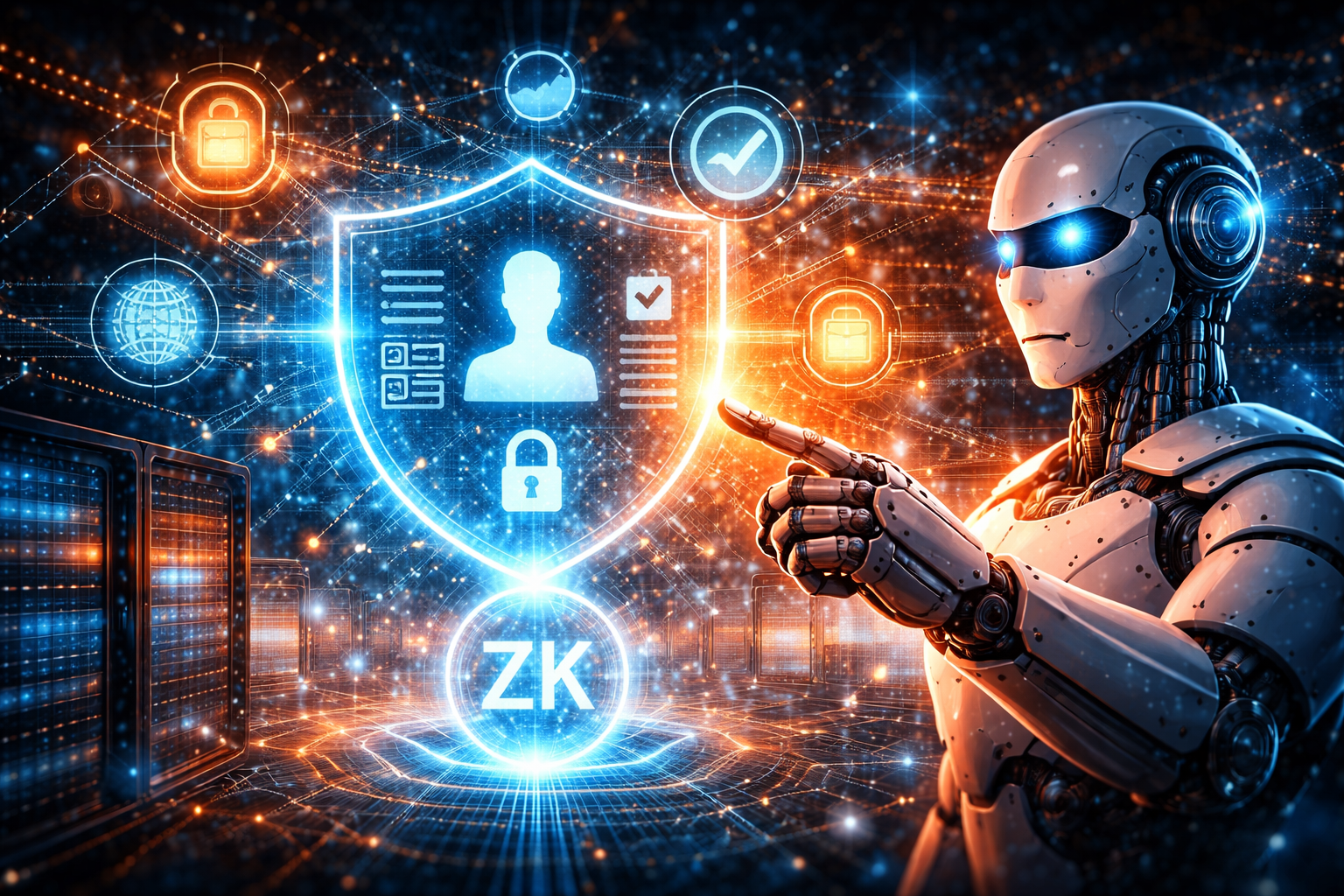
Zero-knowledge identity and AI are redefining privacy in 2026, enabling secure, decentralized verification systems without exposing personal data.
By Val Andrew | chainintellectcoin.com | March 28, 2026
Privacy is becoming one of the most critical issues in the evolving digital economy. In 2026, a powerful combination of zero-knowledge proofs (ZKPs) and artificial intelligence is transforming how identity and data are managed across blockchain networks.
As governments, institutions, and digital platforms expand their use of AI, the need for secure and private identity verification is growing rapidly. Zero-knowledge technology offers a solution—allowing users to prove information without revealing the underlying data.
This shift is positioning privacy as a core layer of the next-generation internet.
What Are Zero-Knowledge Identity Systems?
Zero-knowledge proofs enable users to verify information without exposing sensitive details.
For example, a user can prove:
- They are over a certain age
- They hold sufficient funds
- Their identity is verified
—all without revealing personal data.
When combined with blockchain, these proofs create secure, decentralized identity systems that protect privacy while enabling trust.
AI Is Enhancing Privacy Infrastructure
Artificial intelligence is playing a growing role in identity systems by improving verification processes and detecting fraud.
AI can:
- Analyze behavioral patterns
- Detect anomalies in identity usage
- Automate compliance checks
When integrated with ZKPs, AI enables identity systems that are both intelligent and privacy-preserving.
The Shift Toward Private Digital Economies
The integration of ZK identity and AI is leading to the emergence of privacy-first digital economies.
In these systems:
- Users control their identity data
- Transactions can be verified without exposure
- Platforms operate with reduced data risk
This model is gaining traction as concerns around surveillance, data breaches, and centralized control continue to grow.
Infrastructure Is Evolving for Privacy
Blockchain infrastructure is adapting to support private transactions and identity systems at scale.
Projects exploring AI + blockchain integration—including ecosystems like HAIN—are focusing on:
- Secure identity layers
- Verifiable transactions
- Privacy-preserving smart contracts
These developments indicate a broader shift toward confidential and decentralized digital systems.
Insight
Privacy is no longer optional—it is becoming a foundational requirement for digital systems.
The combination of zero-knowledge proofs and AI creates a new model where trust does not require transparency of personal data, only verification of truth.
Opinion
Val Andrew — The future of digital identity will be defined by privacy, not exposure. Centralized systems have failed to protect user data consistently.
Zero-knowledge technology changes the equation by allowing individuals to prove what matters without giving up control of their information.
Prediction
By the end of 2026:
- Zero-knowledge identity systems will be integrated into major financial platforms
- AI-driven privacy verification will become standard across Web3 applications
- Privacy-focused blockchain infrastructure will see rapid adoption
This could redefine how trust is established in the digital world.
Conclusion
Zero-knowledge identity combined with artificial intelligence represents a major step forward in digital privacy.
As adoption grows, these technologies could reshape how identity, transactions, and data are managed—creating a more secure, decentralized, and privacy-focused digital economy.